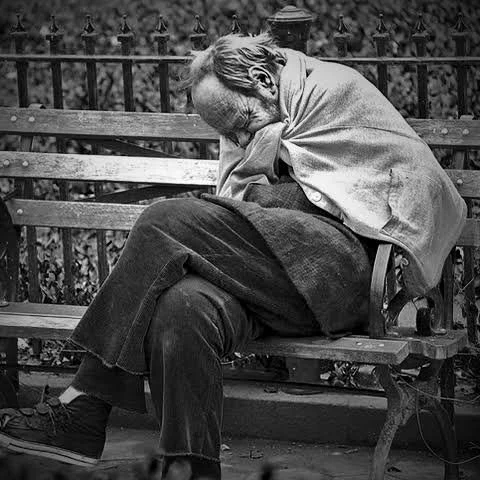
UGLY STATISTICS:
THE NATIONAL NUMBERS
(As of July 2025)
8,000,000: Total elders (65+) currently in Canada
450,000: Elders (65+) currently living below the poverty line
27,000+: Homeless elders registered in shelters every single night
25,000+: Estimated "Hidden Homeless" elders freezing in cars or couch-surfing to survive
7 to 10 Years: The current wait-list for subsidized senior housing in major urban centres
OUR VETERANS - ABANDONED HEROES
Estimates of how many Canadian veterans are currently homeless vary sharply —
from roughly 2,600 according to Veterans Affairs Canada's own tracking, to as many as 10,000
according to Homes For Heroes Foundation.
Veterans are twice as likely to experience homelessness than non-veterans
Female veterans are twice as likely as male veterans to end up unhoused
The support most requested by homeless veterans is simply a place they can afford to live
THE SIREN STATISTIC
The proportion of shelter users aged 50 and older has more than doubled in a generation —
rising from 13.5% in 2005 to roughly 32% by 2021, according to Canada's National Shelter Study
Elders are now the fastest-growing demographic in Canada's shelter system
THE ANATOMY OF A COLLAPSE
THE INCOME
The maximum combined government support (OAS/GIS) for a single elder
is approximately $1,750 per month
THE COST
The average rent for a non-subsidized one-bedroom apartment in major Canadian cities
now regularly exceeds $2,000 per month
THE 50% SHOCK (LATE-ONSET HOMELESSNESS)
Nearly 50% of unhoused elders are experiencing homelessness for the very first time in their lives
after the age of 60. These are not "chronic" cases; these are retirees
crushed by a market they can no longer navigate.
A STOLEN LEGACY (LIFE EXPECTANCY)
Homelessness doesn't just take a home — it takes years. Studies tracking homeless and marginally housed Canadians found their remaining life expectancy is decades shorter than the general population: a homeless 25-year-old man can expect to live only into his 60s, compared to the mid-80s for the average Canadian. Leaving an elder unhoused isn't just neglect — it's a death sentence, measured in years lost.
AGING 20 YEARS FASTER
Due to extreme stress, individuals over 50 on the street develop complex "geriatric syndromes" 10 to 20 years earlier than housed Canadians. Shelters are forced to act as hospitals for patients they are not equipped to save.
THE RECKONING
Every year, hundreds of homeless elders die on Canadian streets, alone in the cold.
Our elders built this country; leaving them behind is unforgivable.
How are we not collectively screaming about this?
DATA SOURCES
Infrastructure Canada / Housing, Infrastructure and Communities Canada — The National Shelter Study
Statistics Canada — Canadian Housing Survey & Housing Data Portal
Everyone Counts 2024 Highlights Report Part 2 – Survey of people experiencing homelessness
Veterans Affairs Canada — Veteran Homelessness Official Program & Fact Sheets